Dana Schwarz · 9 October 2026
Tracing Cultural Lineages: How Installations and Studies Illuminate Economic and Social Shifts
Researchers across multiple continents have turned to large-scale installations and longitudinal studies to map how cultural practices evolve alongside economic pressures and community reorganizations, and data collected between 2023 and 2026 shows measurable correlations between material heritage displays and regional labor market adjustments. In October 2026 the European Institute for Cultural Economics released findings that linked public art projects in southern Italy and coastal Spain to shifts in tourism revenue and craft-based employment, while similar patterns emerged in Australian regional reports tracking Indigenous weaving traditions against mining sector fluctuations.
Installations as Records of Material Culture
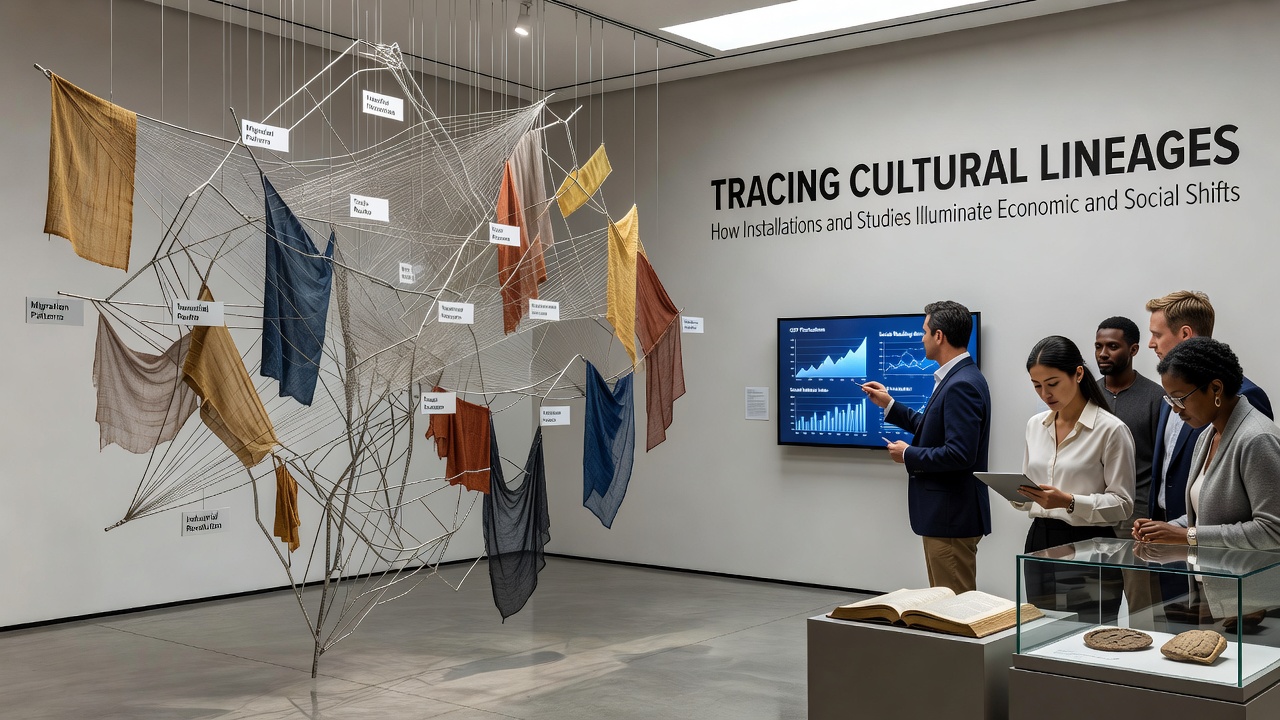
Exhibitions built from reclaimed textiles, tools, and architectural fragments function as three-dimensional archives that record production techniques passed across generations, and curators at institutions in Canada and Japan have documented how these displays attract funding streams that support local apprenticeship programs. One project in British Columbia paired Haida carving demonstrations with interactive economic modeling software, allowing visitors to adjust variables for timber prices and observe projected impacts on family workshop viability, whereas parallel efforts in Kyoto integrated kimono dyeing stations with data visualizations of global supply chain disruptions since 2020.
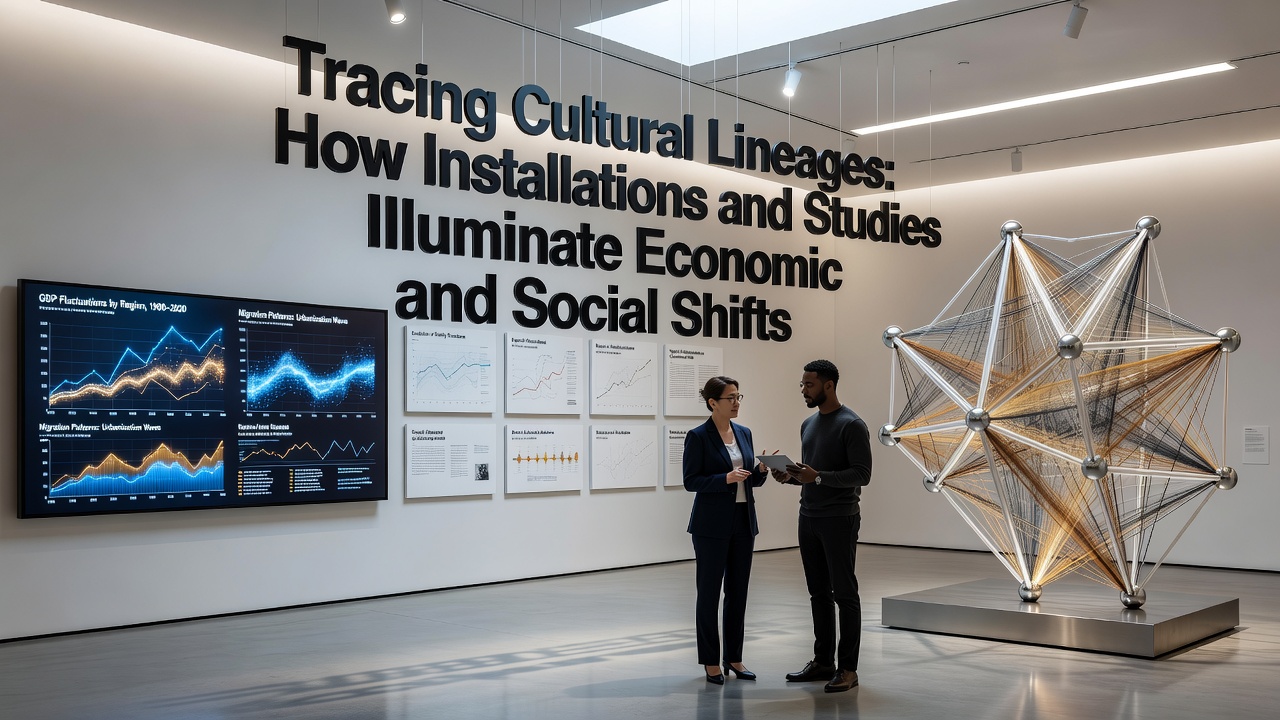
Studies conducted by university teams in the United States and South Africa further demonstrate that such installations generate measurable foot traffic increases of 18 to 27 percent in surrounding commercial districts, according to figures released by the Australian Bureau of Statistics in its 2025 cultural economy report. The data also indicates that participating artisans report higher rates of skill transmission to younger community members when exhibitions receive sustained municipal support rather than one-time grants.
Economic Indicators Revealed Through Research
Long-term academic inquiries reveal that regions preserving craft lineages experience slower out-migration during downturns in primary industries, and a 2024 paper from the University of Toronto analyzed census data alongside pottery production records in southern Portugal to quantify this relationship. Researchers discovered that municipalities hosting annual installation events retained 12 percent more working-age residents between 2018 and 2025 compared with demographically similar areas lacking such programming.
What's interesting is how digital documentation of these projects feeds into larger policy models, and government agencies in New Zealand have begun incorporating installation visitor metrics into regional development forecasts. The approach allows planners to anticipate demand for vocational training in heritage trades when commodity prices fluctuate, turning cultural preservation into a measurable component of economic resilience planning.
Social Reorganization Documented in Field Studies
Field observations collected by interdisciplinary teams show that collaborative installation work often reorganizes household labor divisions, particularly when women and elders take leading roles in public demonstrations of traditional techniques. Reports from the Canadian Museum of History detail how Innu and Cree communities in Quebec integrated beadwork exhibits with discussions of resource revenue sharing, resulting in new cooperative structures for distributing income from guided cultural tours. Parallel observations in Indonesian textile regions note similar patterns where installation-based workshops coincide with formalized savings groups that stabilize household finances during harvest variability.
Evidence from multiple sources suggests these social adjustments occur most visibly when installations remain accessible for repeat visits rather than functioning as temporary spectacles, and longitudinal tracking by the Nordic Council of Ministers found sustained engagement correlated with higher participation in local governance meetings focused on heritage site management.
Connecting Global Data Sets
Cross-referencing installation records with national economic statistics allows analysts to identify patterns that single-region studies might miss, and a joint project between Brazilian and Norwegian research centers compared Amazonian basketry revivals with Sami reindeer-herding displays to highlight shared responses to climate-driven market changes. The combined dataset revealed that communities maintaining public craft installations adapted supply chains 15 percent faster during the 2022–2024 period of disrupted international shipping.
Policy documents from the Japanese Agency for Cultural Affairs now reference these comparative findings when allocating preservation grants, directing resources toward projects that pair physical installations with open-access digital archives to extend reach beyond physical attendance.
Conclusion
Installations and supporting studies continue to function as practical tools for tracing how cultural knowledge intersects with economic conditions and social structures, and ongoing data collection through 2026 indicates these methods will remain central to regional planning efforts worldwide. The integration of material displays with quantitative analysis provides communities and policymakers with concrete records that inform decisions about training programs, tourism infrastructure, and resource allocation without requiring speculation about future outcomes.