Lars Lang · 20 November 2026
How AI Archives Are Uncovering 19th-Century Influences on Contemporary Collective Actions
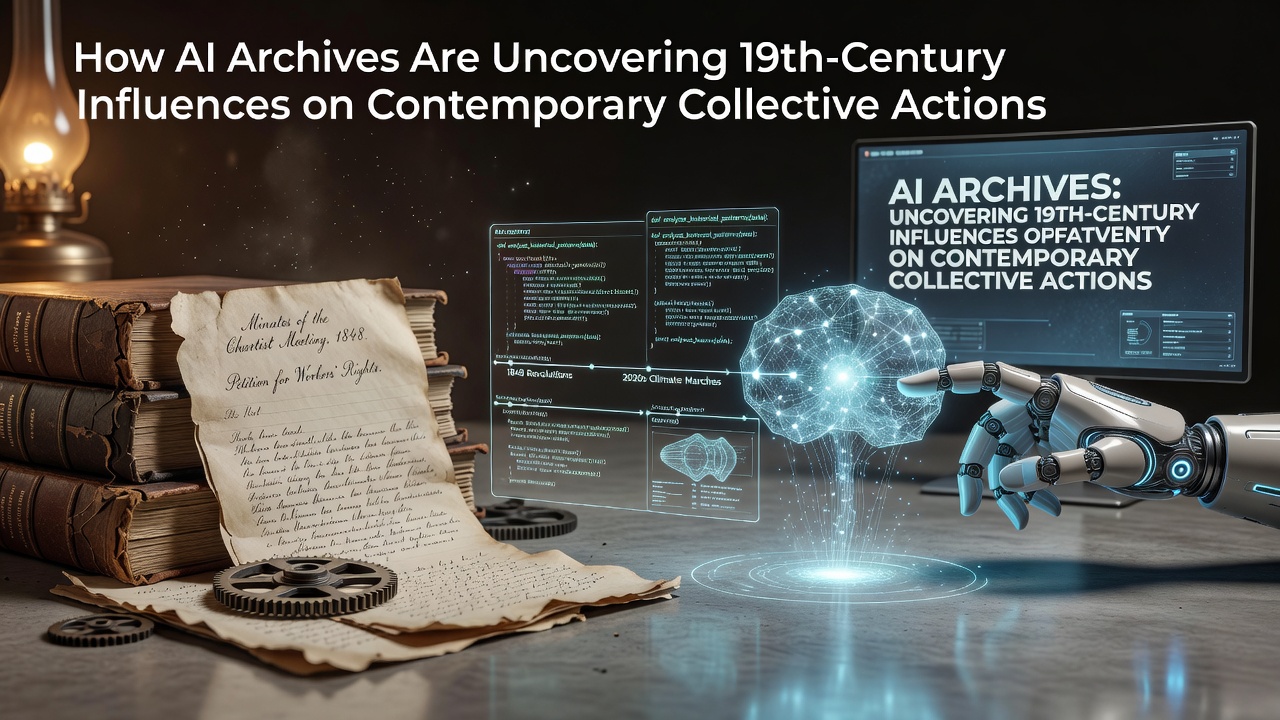
Artificial intelligence systems now process extensive digitized collections of 19th-century records, and these efforts identify recurring patterns in labor organizing, suffrage campaigns, and urban protests that echo through today's demonstrations and advocacy networks. Data from multiple archives shows direct textual and organizational parallels between events such as the 1848 revolutions and current global coordination tactics, while machine learning models map these connections at scale.
Foundations of 19th-Century Collective Movements
The Industrial Revolution generated widespread worker associations across Europe and North America, and historians have long documented how groups like the Chartists in Britain and the Knights of Labor in the United States developed communication strategies that relied on pamphlets, newspapers, and public assemblies. Studies from the Library of Congress indicate that these methods established templates for information dissemination that later movements adapted, including the use of printed manifestos to build solidarity across regions.
Women's suffrage organizations in the same era employed similar petition drives and public marches, and records preserved in national repositories reveal consistent leadership structures and funding mechanisms that parallel elements observed in contemporary gender-equality campaigns. Researchers at several universities have cross-referenced these documents with modern datasets to quantify the persistence of specific rhetorical phrases and meeting formats.
AI Techniques Applied to Archival Materials
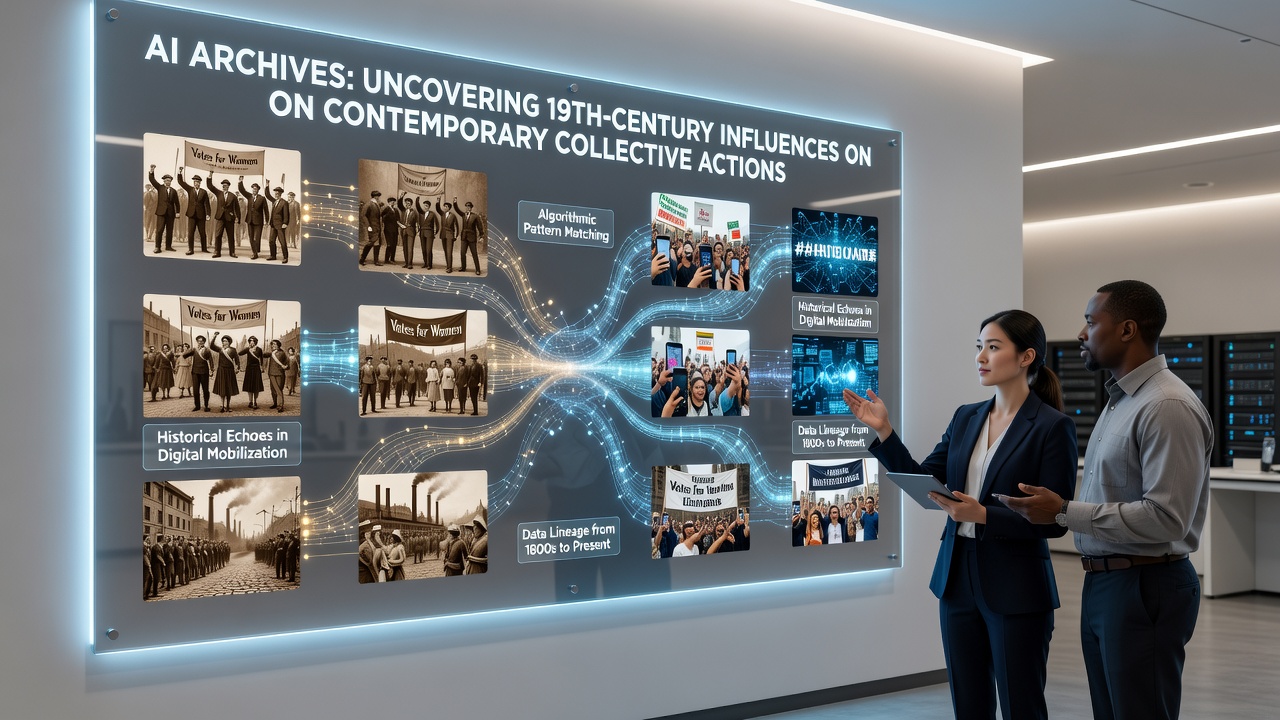
Machine learning algorithms trained on optical character recognition outputs now scan millions of pages from 19th-century periodicals and correspondence collections, and natural language processing identifies semantic similarities between historical calls to action and social media posts from recent years. These systems detect shared motifs such as references to collective rights and economic justice, while also tracking the evolution of protest iconography across time periods.
Graph-based network analysis further reconstructs communication webs among 19th-century activists, and the same frameworks applied to contemporary digital traces demonstrate overlapping node structures in how information spreads during collective events. Figures from the Europeana digital platform show that integration of these methods has accelerated the identification of previously overlooked connections by factors of ten or more in targeted case studies.
One research team applied unsupervised clustering to transcripts of 1848 assembly speeches alongside data from 2020 protests, and the results highlighted recurring demands for expanded voting access that appear in both datasets with measurable frequency. Such findings rely on open-access repositories maintained by government and academic institutions rather than proprietary collections alone.
Documented Connections in Recent Analyses
Projects launched through 2025 have produced peer-reviewed outputs that detail how 19th-century mutual aid societies influenced the structure of modern mutual support networks during public health crises, and these reports draw on records from both North American and European sources. The analyses emphasize measurable similarities in membership recruitment language and resource allocation practices without asserting causation.
November 2026 is scheduled to feature an international symposium hosted by a consortium of digital humanities centers, where teams will present updated models that incorporate newly digitized materials from additional national collections. Participants expect to release comparative statistics on the frequency of specific organizational tactics across two centuries of documented events.
Additional work has examined the role of 19th-century print culture in shaping visual symbols still employed in street actions today, and quantitative image recognition tools applied to illustrated broadsides and current protest photography confirm repeated use of certain compositional elements. These observations rest on datasets compiled by institutions including the Smithsonian and several European research libraries.
Limitations and Verification Processes
AI-driven archival research requires extensive human oversight to validate pattern matches, and experts note that contextual differences between eras can produce false positives when algorithms prioritize lexical overlap alone. Ongoing protocols therefore combine automated outputs with manual review by subject specialists who cross-check against primary sources.
Data quality varies across digitized collections, and incomplete scans or inconsistent metadata can skew results toward better-preserved institutional records rather than grassroots materials. Research teams address these gaps by supplementing public archives with targeted acquisitions from regional historical societies.
Conclusion
AI processing of historical archives continues to surface quantifiable links between 19th-century collective actions and present-day movements through systematic comparison of texts, networks, and visual records. The approach relies on established repositories and peer-reviewed methodologies that emphasize verification at each stage. As more collections undergo digitization and model refinement proceeds, the volume of documented parallels is expected to increase, providing researchers with additional data points for longitudinal studies of social organization patterns.