
Felix Butler · 23 October 2026
Historian Interviews Reveal Arvelo's AI Archive Contributions to Mediterranean Craft Economy Tracking
Historian interviews have become central to refining the data layers within Arvelo's AI archive, which focuses on Mediterranean craft economies across Italy, Spain, Greece, and North African coastal regions. These conversations supply qualitative details that complement quantitative records from trade logs, production statistics, and material sourcing databases, allowing the system to map shifts in artisanal practices over multiple decades.
Building the Archive Through Layered Inputs
Arvelo's platform aggregates information from government trade registries, regional craft guilds, and academic field notes, yet gaps in historical context persist until oral accounts fill them. Interviews with retired potters in Sicily, weavers in Andalusia, and woodworkers in the Cyclades islands provide timelines of technique changes that align with economic events such as currency shifts or material import restrictions. The AI processes these narratives by cross-referencing named locations, tool descriptions, and market routes against existing datasets, which improves accuracy in identifying patterns of craft specialization.
Researchers at several Mediterranean universities supply structured interview protocols that emphasize economic indicators including labor hours, material costs, and distribution networks. When historians record details about seasonal migrations of skilled workers between coastal towns, the archive updates its models to reflect temporary hubs of production that standard shipping manifests often overlook. This integration has supported more precise reconstructions of craft supply chains during periods of political transition in the region.
October 2026 Updates and Expanded Data Sets
In October 2026 the archive incorporated new interview transcripts from projects conducted along the Adriatic and Aegean coasts, adding details on how small-scale leather and ceramic workshops responded to changes in EU export regulations. The AI algorithms adjusted weighting factors for variables such as apprenticeship duration and family business continuity, which historians had flagged as under-represented in earlier digital records. These adjustments enabled the system to generate revised visualizations of craft economy clusters that extend from coastal ports into inland villages.
Case Examples of Interview-Driven Refinements
One project in southern France involved interviews with three generations of olive wood carvers who described shifts from local tourism markets to international online sales platforms between 2015 and 2023. The resulting data allowed Arvelo's models to link specific price fluctuations with changes in raw material sourcing from North African suppliers. Another series of conversations in Malta highlighted the role of informal bartering networks that supported glass bead production during supply disruptions, information that trade statistics alone did not capture.
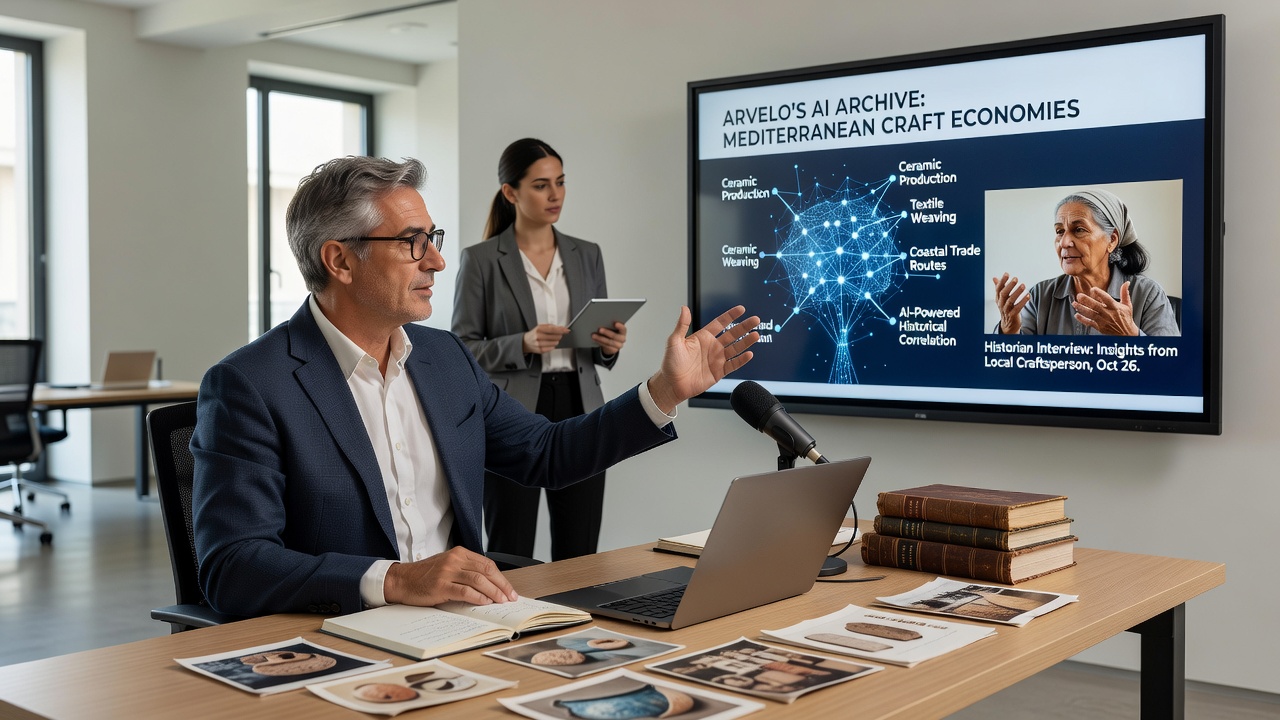
These examples illustrate how the archive moves beyond static catalogs to dynamic representations that incorporate lived economic experiences. Historians note that the interviews also surface information about gender-specific roles in craft production, such as women's contributions to textile finishing stages that official records frequently omit.
Technical Integration of Qualitative and Quantitative Sources
The AI system employs natural language processing trained on domain-specific vocabularies from craft communities to extract entities like tool types, workshop locations, and transaction methods. When historians provide context about informal apprenticeships or seasonal fairs, the algorithms reclassify related data points to reflect non-monetary exchanges alongside formal sales figures. This approach has produced updated heat maps of craft activity that show higher concentrations in certain inland areas than previously estimated from port records alone.
According to reports from the European Commission's cultural heritage programs, similar hybrid methodologies have improved monitoring of intangible cultural assets across member states. Arvelo's archive applies comparable techniques while maintaining focus on economic metrics such as output volumes and employment patterns within craft sectors.
Conclusion
Historian interviews continue to supply essential context that strengthens Arvelo's AI archive in its analysis of Mediterranean craft economies. The combination of recorded personal accounts with structured economic data supports more complete reconstructions of production networks and market adaptations. Ongoing expansions scheduled beyond 2026 will incorporate additional regional voices to further refine these digital models.